Los Angeles Man Indicted Over Counterfeit Loloma Jewelry

Per an article by Andy Stiny published on April 28 in the Santa Fe New Mexican, a Los Angeles man has been indicted on six counts of fraud, including two counts of violating the federal Indian Arts and Crafts Act, which prohibits the sale of items falsely claimed to be made by Native Americans.  In this case, he allegedly tried to sell counterfeit jewelry he claimed to have been made by the late Hopi jeweler, Charles Loloma. 

Read the full article

The importance of searching out art dealers who uphold the ethical standards set forth by ATADA can not be overstated.
More information can found on the ATADA website at: atada.org/for-collectors

image courtesy: marthastruever.com

Judge Reverses Opinion - Dismisses Chaco Canyon Drilling Case

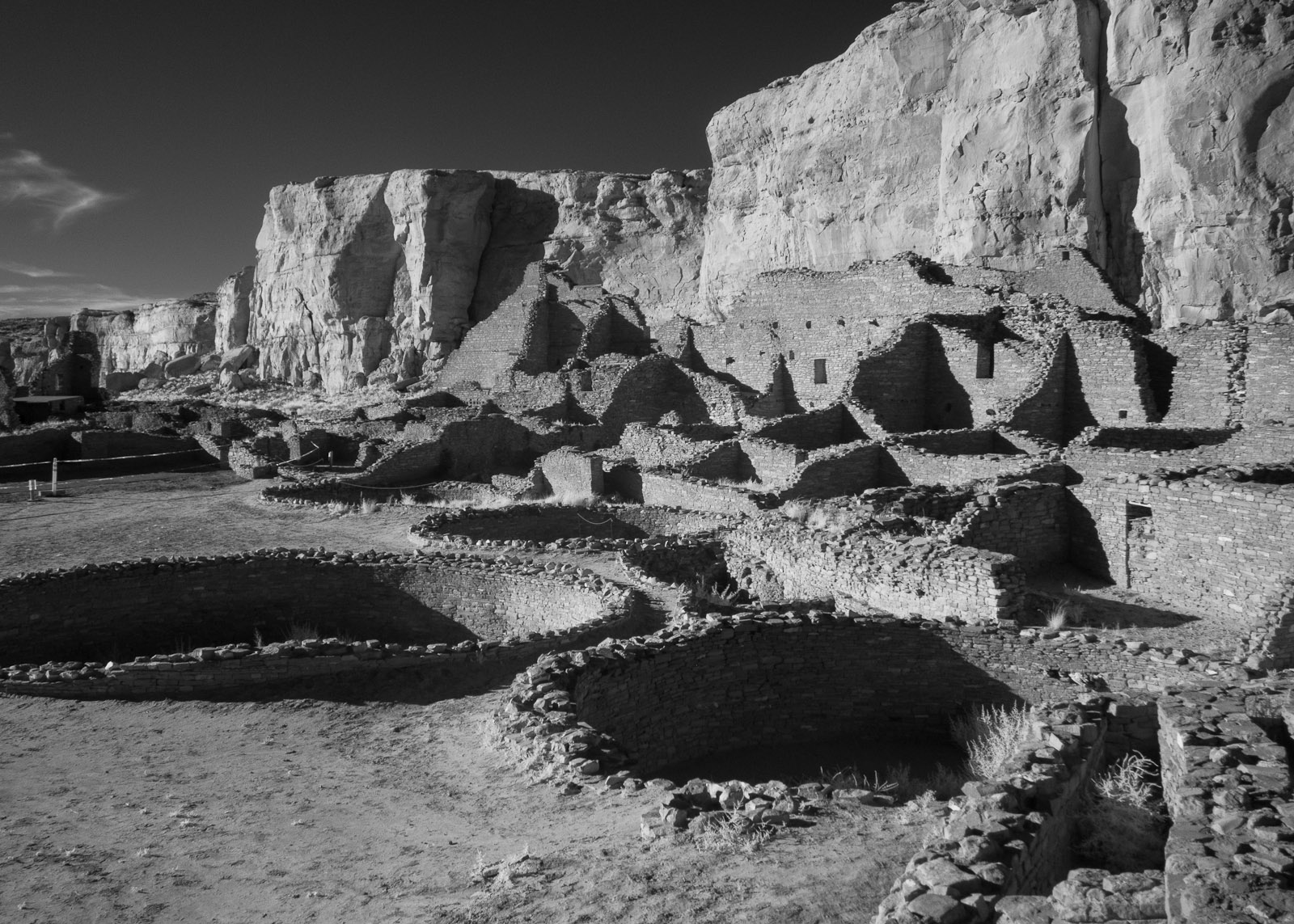
Chaco Canyon National Historic Park, Pueblo Bonito, Author: Greg Willis, from Denver, Colorado, USA, Wikimedia Commons.

Chaco Canyon National Historic Park, Pueblo Bonito, Author: Greg Willis, from Denver, Colorado, USA, Wikimedia Commons.

Judge James O. Browning has issued a memorandum opinion reversing his previous conclusion that the BLM had violated the National Historic Preservation Act (NHPA).

In his decision, Judge Browning determined that the BLM had met the minimum requirements of the NHPA and dismissed the case which had been brought by Diné Citizens Against Ruining Our Environment, San Juan Citizens Alliance, WildEarth Guardians and the Natural Resources Defense Council. 

More information about this case can be found on the Cultural Property News site and Federal judge tosses lawsuit over Chaco-area drilling by Andrew Oxford published in the Santa Fe New Mexican, April 25, 2018.


Chaco Canyon Update: The BLM Failed to Comply with the National Historic Preservation Act

Chaco Canyon National Historic Park, Pueblo Bonito, Author: Greg Willis, from Denver, Colorado, USA, Wikimedia Commons.

Chaco Canyon National Historic Park, Pueblo Bonito, Author: Greg Willis, from Denver, Colorado, USA, Wikimedia Commons.

Cultural Property News has an update on the current controversy surrounding oil and gas lease sales near Chaco Culture National Historic Park.  The U.S. District Court for the District of New Mexico has issued a preliminary order concluding that the BLM did violate the National Historic Preservation Act (NHPA). 

Read the full article here ➤


ATADA Foundation Update - Museum of Northern Arizona

Grant Report - Museum of Northern Arizona

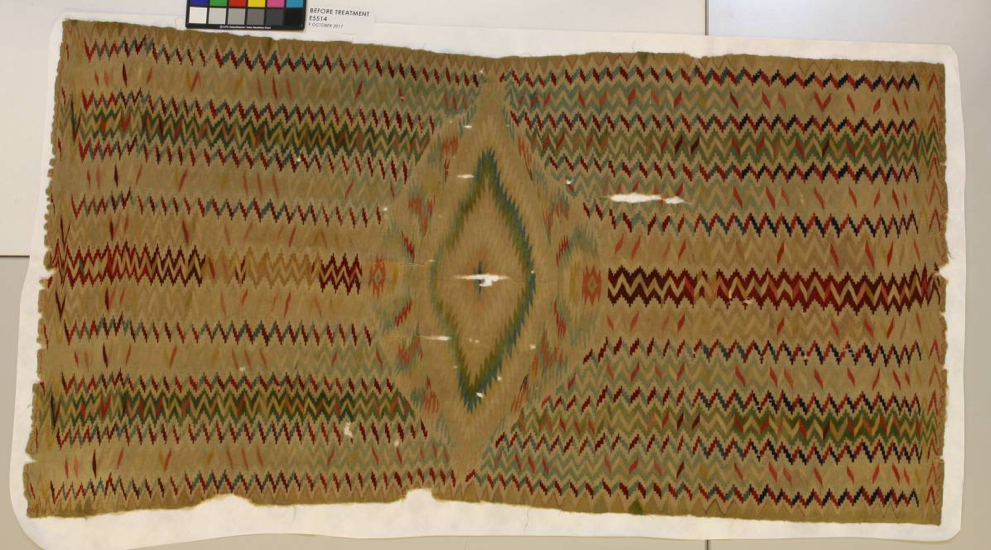
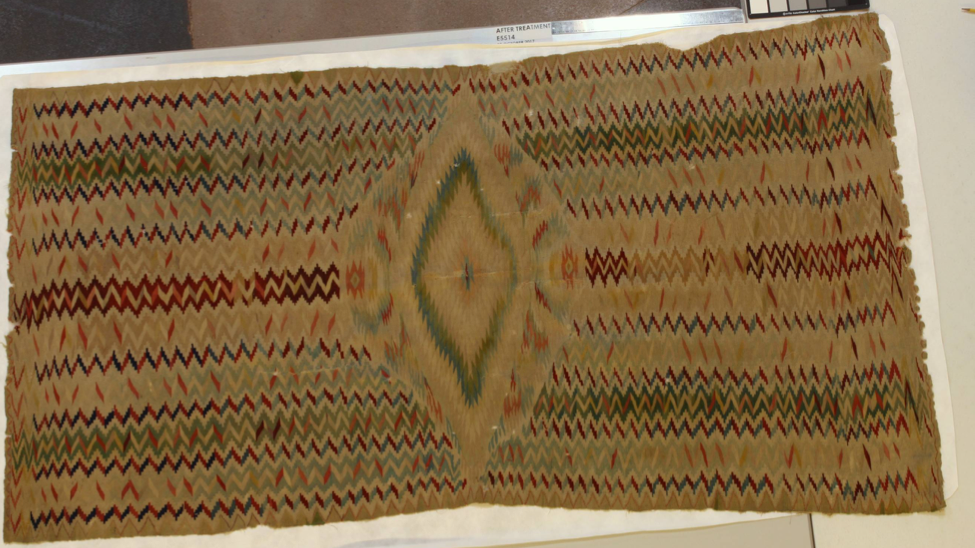
Stabilization of Navajo Slave Blanket (E5514)

Dr. Jennifer McLerran
Art History Associate Professor
Northern Arizona University


Museum of Northern Arizona (MNA) staff conduct frequent consultations with Native artists, scholars, and cultural preservation officers in efforts to accurately represent indigenous cultures. During the course of several recent meetings, Navajo consultants told museum staff that they wished to see the complex history of relations between their ancestors and Euro-Americans more fully represented than has heretofore been the case in most museum displays. One historical period that consultants expressed a desire to see represented in greater depth was the early colonial period.

In his extensive 2002 study of Native and Euro-American relations in the colonial southwest, Captives and Cousins: Slavery, Kinship, and Community in the Southwest Borderlands, historian James F. Brooks describes this period as characterized by a vigorous “captive exchange economy.”[1] It was a time of great unrest and social upheaval that saw the clash and sometimes the melding together of long-standing Euro-American and Indigenous traditions of kidnap, slavery and cross-cultural exchange of human beings. Scholars have estimated that by the early 1800s over two-thirds of Navajo families had lost members to capture and enslavement. While debate continues to stir regarding the extent and impact of such practices in the colonial southwest, the physical remains of a particular form of indigenous cultural practice speak to the veracity of claims of widespread seizure and enslavement of Navajos by the Spanish, in alliance with the Comanches and Utes, during this period. That practice is Navajo weaving and its historical expression is the “slave blanket.”

In the 1800s Navajo weavers’ works were commonly regarded as superior to those produced by Hispanic weavers of the Southwest and were often exported for sale in Mexico where they garnered high prices. Navajo women were sometimes kidnapped by neighboring groups and traded into Hispanic households where they were forced to weave. Their overseers’ desires for textiles suited to market demand resulted in works of Navajo manufacture that featured designs and color schemes more typical of Rio Grande (Southwest Hispanic) textiles. Cogent physical expressions of this turbulent time and its complex human interactions, these weavings have become known as “slave blankets.”

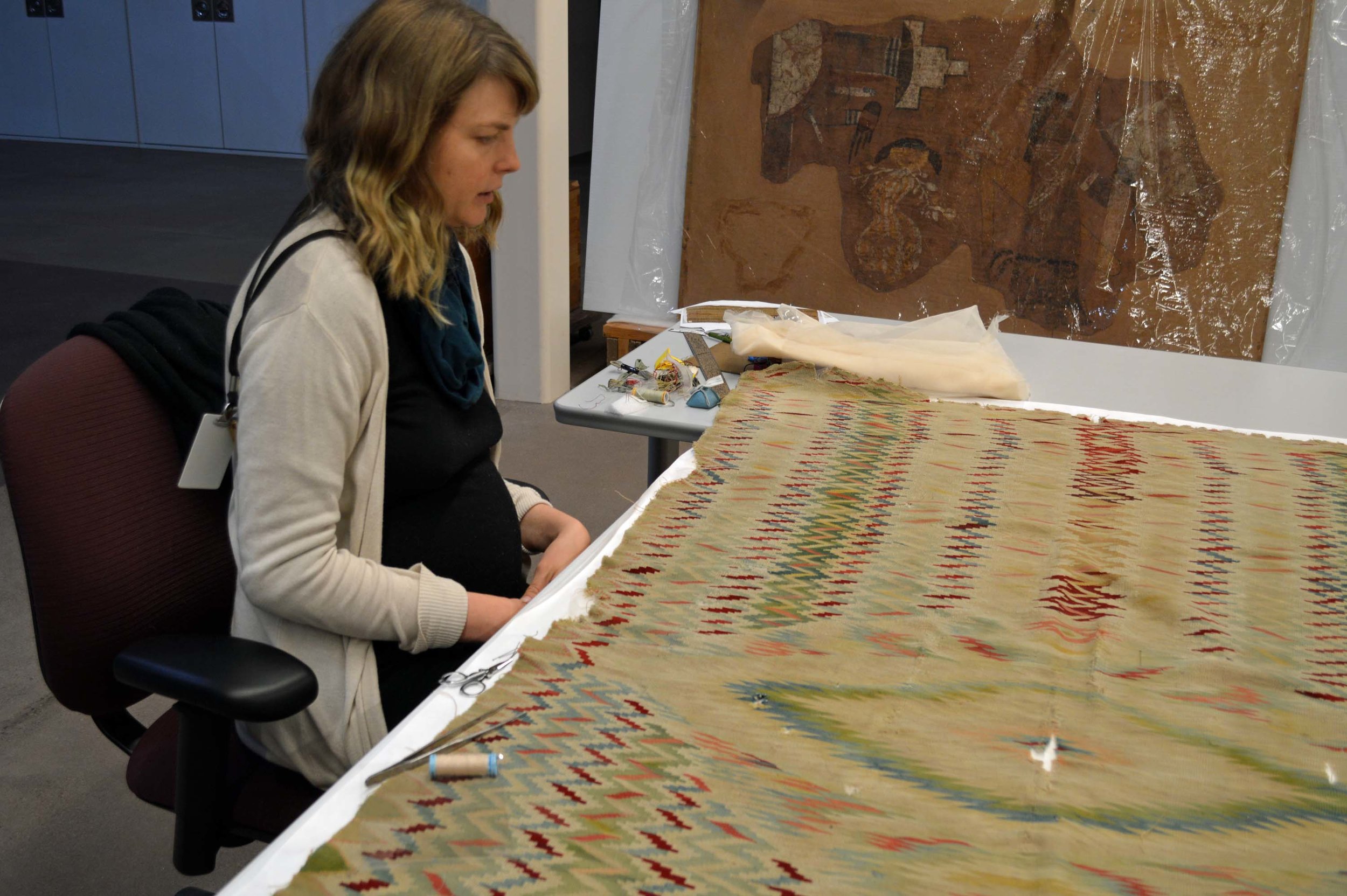
Rachel Freer-Waters, Contract Conservator, working to stabilize MNA 2723/E5514

Rachel Freer-Waters, Contract Conservator, working to stabilize MNA 2723/E5514

Fortunately, the MNA collection includes several slave blankets, and Navajo consultants identified one such piece (MNA Collection Number 2723/E5514), which bears a striking resemblance to a Saltillo serape, as of special interest. Saltillo serapes, produced in northeastern Mexico, were highly popular in the mid-1800s. Exquisitely woven, they bore a central, serrate-edged diamond motif, banded design field, contrasting borders, and a prominent center seam that resulted from the sewing together of two identical bands of woven fabric. Slave blankets were produced with materials and dyes available only in Spanish and Mexican households of the period. In high demand in the Southwest due to their high quality and elegant design, they were also traded in Mexico, thereby entering an international art market, ending up in Hispanic households and sometimes finding their way to Europe.

Hybridity is not unique to Navajo slave blankets. Navajo weavers have always been open to incorporation of influences from other cultures. Since at least the 1800s, Navajo weavings have been produced and appreciated at the intersection of complex and diverse cultures and multiple markets. Among the most prized textiles exchanged within 19-century North American intercultural trade networks, they were actively sought out by Southwest Hispanic and Mexican communities for personal use and trade. Wearing blankets produced by highly skilled Navajo weavers also found their way to the Northern and Central Plains where they were especially prized possessions of high-status members of such tribes as the Blackfeet and Lakota.

A number of slave blankets, originally regarded as Rio Grande weavings but subsequently identified as Navajo, have come to light in museum collections. The piece identified by Navajo consultants from MNA’s collections is one of the most interesting examples of the form. Acquired in New Mexico between 1884 and 1886 by the donor’s greatgrandfather and then passed down in the family, the piece has reliable provenance. Additionally, it has been studied by major Navajo textiles scholars, including Ann Lane Hedlund and Laurie Webster, who have verified its authenticity and supported the contention that it is, indeed, a Navajo slave blanket. In her assessment of the weaving, Webster noted that it is:

a significant and intriguing piece in the collection. Previously cataloged as a Hispanic New Mexican weaving, it appears to be a Navajo-woven version of a Saltillo serape with a poncho slit, dating to the period ca. 1860- 1865. The yarns and weave of this serape are incredibly fine, and its Saltillo-influenced design, silky texture, and soft color palette strongly resemble the Chief White Antelope blanket from the same period. The identification of 2723/E5514 as Navajo-woven rather than Mexican is based on the presence of selvage cords along both sides and one end, and on the use of terraced (rather than serrated) chevron motifs in the background bands. Another interesting feature of this textile is the presence of commercial linen warps. These are extremely rare in Southwestern weavings, but common in Mexican Saltillo serapes. The wefts include handspun churro wool yarns and very fine 3 and 4-ply commercial yarns.

However, Webster determined that the piece was in fragile condition and needed stabilization. The services of textiles conservator Rachel Freer-Waters were enlisted and she determined that the piece could be sufficiently stabilized. Freer-Waters produced a proposal for the piece’s conservation and stabilization, and MNA Collections Director Elaine Hughes submitted the proposal to ATADA for funding. Funding was awarded, and Freer-Waters proceeded with treatment. She carefully vacuumed the piece and stabilized tears and losses by underlaying the weaving with sheer polyester fabric, using available yarns in matching colors to stitch the fabric in place. The center of the weaving showed significant damage and, in order to reduce the visibility of such loss, she underlay it with opaque fabric. Before and after photographs show significant improvement in the weaving’s appearance (see illustrations).

Cleaned and stabilized, this historically significant weaving serves as testament to the ways in which Navajo weavers have adapted to demands of multiple and shifting markets and trying social conditions.

________________
[1] James F. Brooks, Captives and Cousins: Slavery, Kinship, and Community in the Southwest Borderlands (Chapel Hill: University of North Carolina Press, 2002), p. 239.


ATADA Foundation Update - White River Valley Museum

Grant Report - White River Valley Museum

Final Report for Grant

Dear ATADA Foundation Members:

In late 2016 we applied to the ATADA Foundation for support to help mount SALISH MODERN: Innovative Art with Ancient Roots (working title Pop Salish). The ATADA Foundation generously provided a $1,000 sponsorship in early 2017. Your gift enabled us to pay for insurance for borrowed artwork, transportation, and two of our interpretive programs.

SALISH MODERN was on display from January through June, 2017 and included the work of 16 contemporary artists of Salish heritage. Twenty six works of art were borrowed from area collectors, galleries and the artists themselves. Laura Sigo of the Suquamish Tribe provided an art history lecture, guest curator Kenneth Greg Watson gave many curator led tours, Upper S’Klallam artist and storyteller Roger Fernandes gave a great performance in the gallery. We toured over 1000 children through the show and it was attended by an interested public for whom much of this information was totally new.

Since photos tell so much more than sentences, what follows is a short photo essay about this exhibit. Again, thank you so much for your trust in us and for this support!

Sincerely,

Patricia Cosgrove
Museum Director
White River Valley Museum


Winter/Spring 2018 Edition of the ATADA News - Available Now!

Click the image to read the latest issue!

Click the image to read the latest issue!

Ancestral Figure “Patong” Ngaju Dayak. Borneo Island, Indonesia. Hardwood. H: 68” (173 cm). 18th to 19th century

Ancestral Figure “Patong” Ngaju Dayak. Borneo Island, Indonesia. Hardwood. H: 68” (173 cm). 18th to 19th century

In This Issue...

Art in Focus: Ancestral Figure "Patong"
Mark Johnson takes a closer look at a rare and highly refined Ngaju Dayak sculpture representing an important ancestor. 

On Trend:
Mark Blackburn gives his take on the current state of the Tribal art market and recaps recent auctions.

Legal Briefs:
U.S.’s UNESCO Withdrawal and the Art World; NAGPRA Repatriation Updates from Ron McCoy.

Legal Committee Report: 
The ATADA Voluntary Returns program has successfully returned over 100 sacred and ceremonial items to Southwestern tribes.  Take an in-depth look at how the program works.

Plus: 
ATADA Foundation Updates
The ATADA Calendar - Upcoming and Ongoing Tribal Art Events

The ATADA News is essential reading for anyone who is
serious about understanding issues facing collectors today.

Black Panther and Museums: the need for a genuine dialogue

A recent article on The Hopkins Exhibitionist website discusses the need for a dialogue about the complicated relationships between museums and the cultures which created the objects in their collections.  

While this article is focused on African art, we should be aware of the possible impacts on all indigenous art in museums and private collections. 

Spoiler Alert: the article does discuss the opening scene of the movie. 

The ATADA Voluntary Returns Program

An overview of the ATADA Voluntary Returns Program has been published on the ArtDaily.com website. 

If you are not familiar with the program, please visit the Voluntary Returns page on our website for an in-depth look at how it works and why we think this community based approach is the best and most efficient method for the return of sacred and ceremonial objects. 

The ATADA Voluntary Returns Program is a community-based initiative designed to bring sacred and highly valued ceremonial objects to Native American tribes. Returns take place through a consultative process in which ATADA representatives work directly with tribal community and spiritual leaders. The program evolved through the recognition by art dealers and private collectors that certain objects, although legal to own, had great importance to tribal communities, and that their return could invigorate and enhance tribal community life.

Bears Ears Opinion piece from two Native American Tribal Leaders

In an opinion piece from The Mercury News, the leaders of two Native American Tribes in California speak about the removal of protections for Bears Ears and other national monuments...

From the article:

Bears Ears was the first national monument protected at the request of tribes and is collectively managed by a commission of tribal members.
By eliminating protections for this sacred national monument, the president is saying that there’s nothing worth protecting in these lands. This is an outrageous suggestion, a slap in the face to the tribes that call Bears Ears home, and an affront to Native Americans all across the country.

Read the Full Article ➤